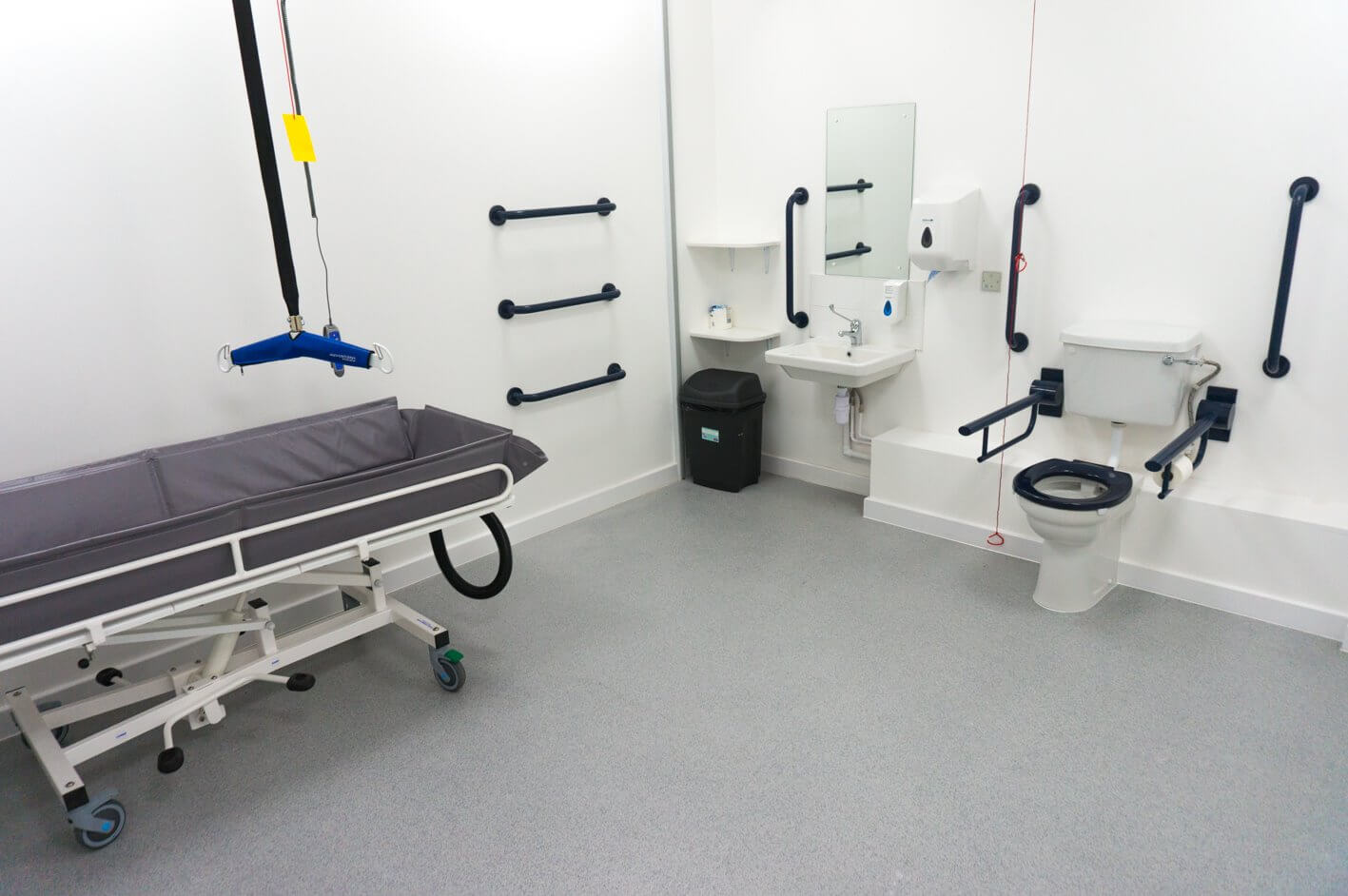
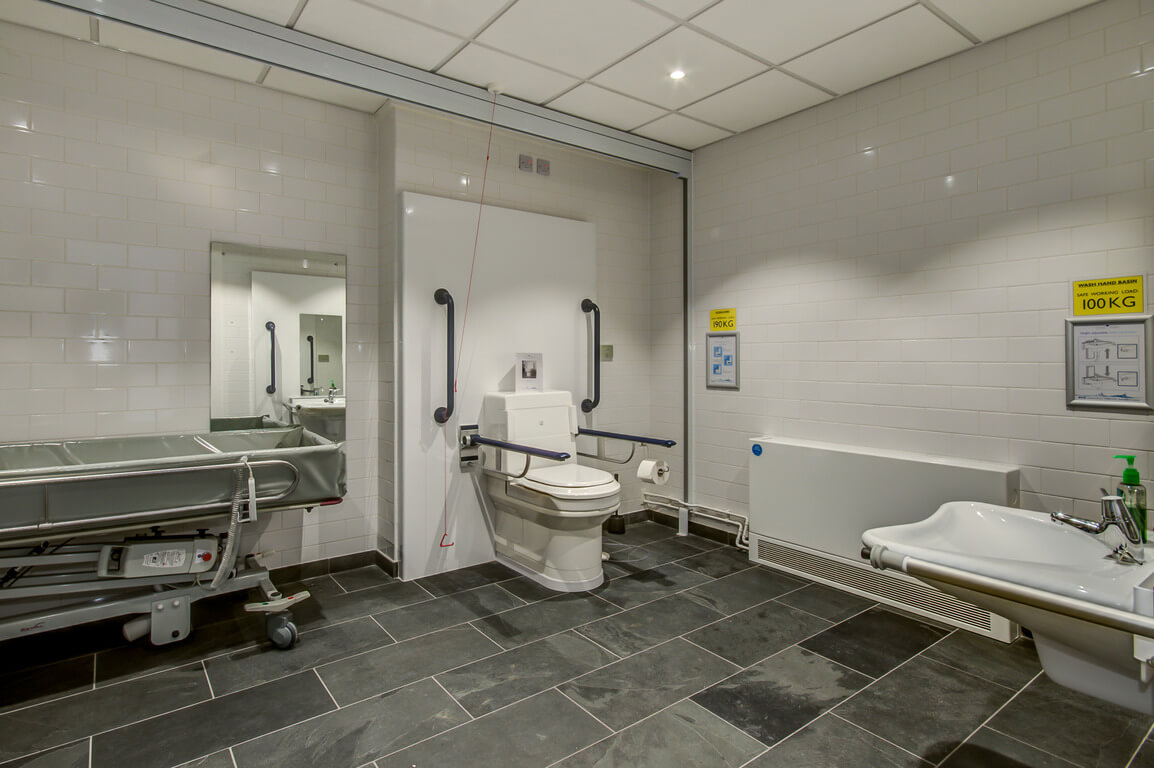
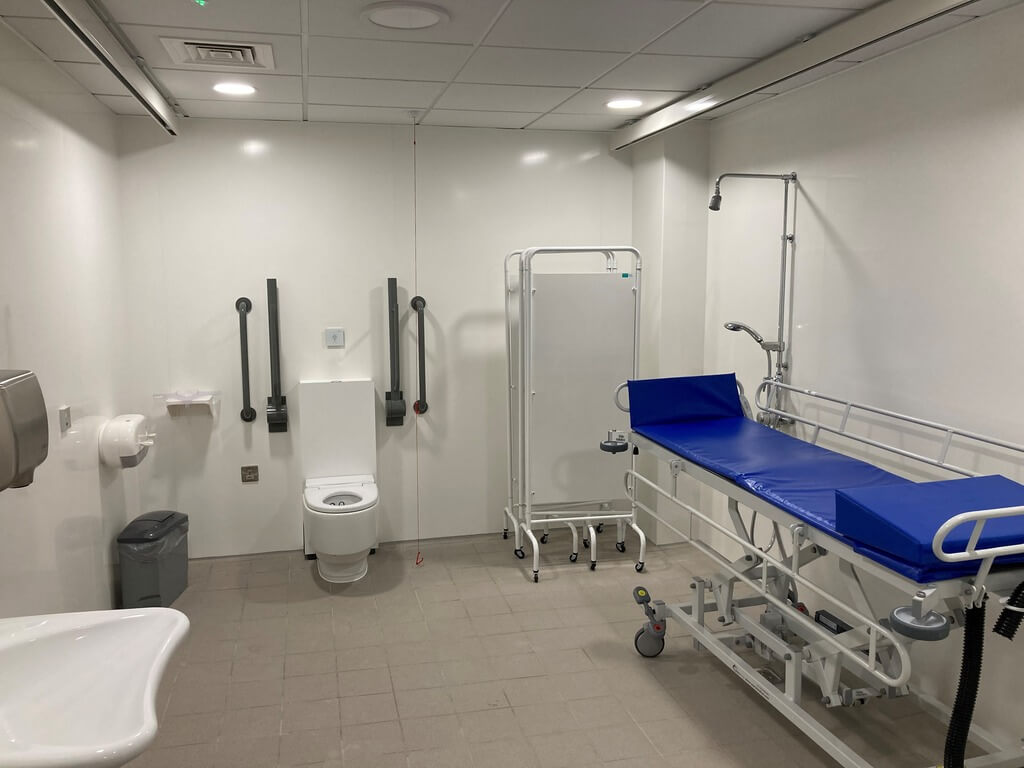
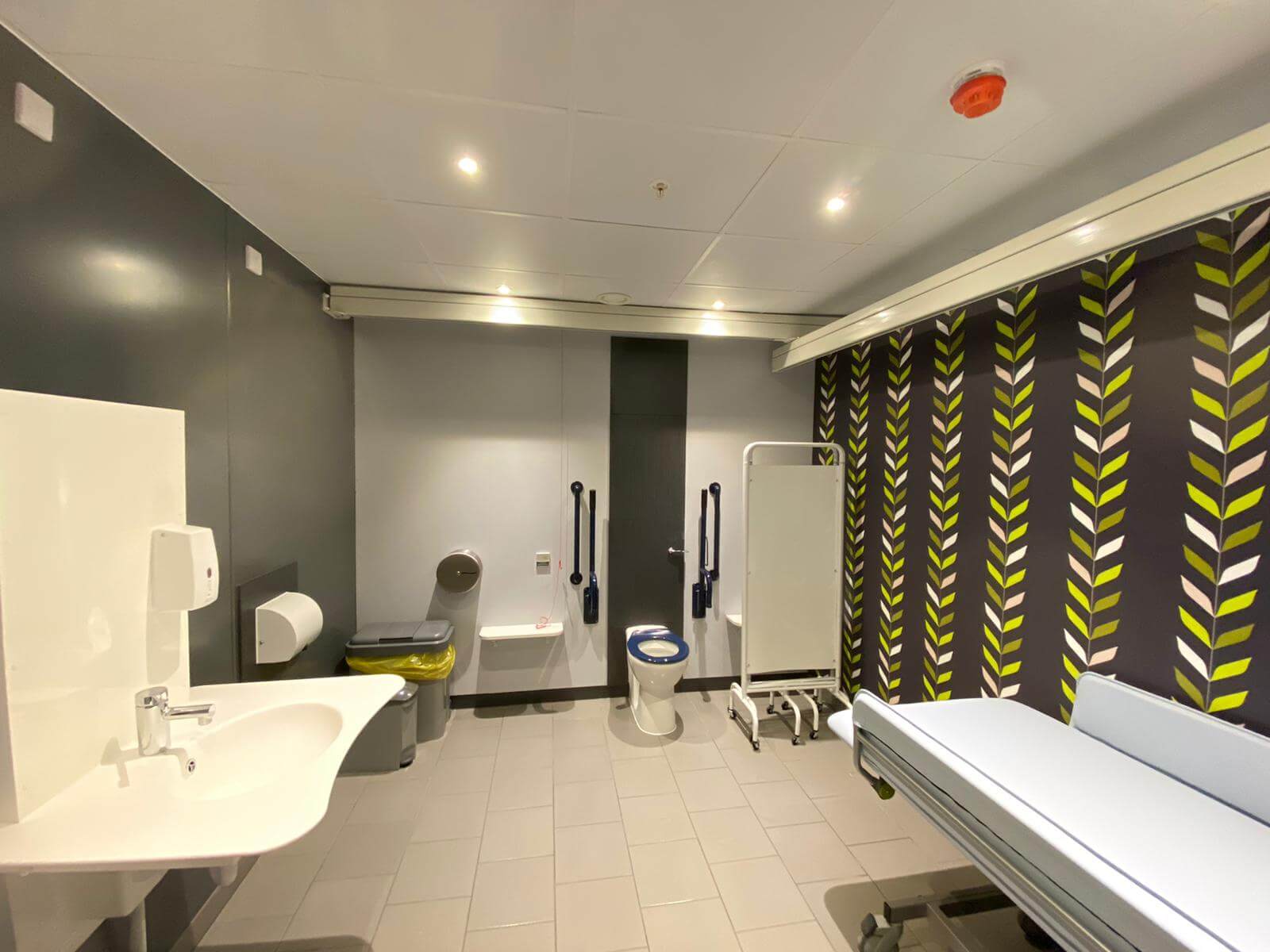
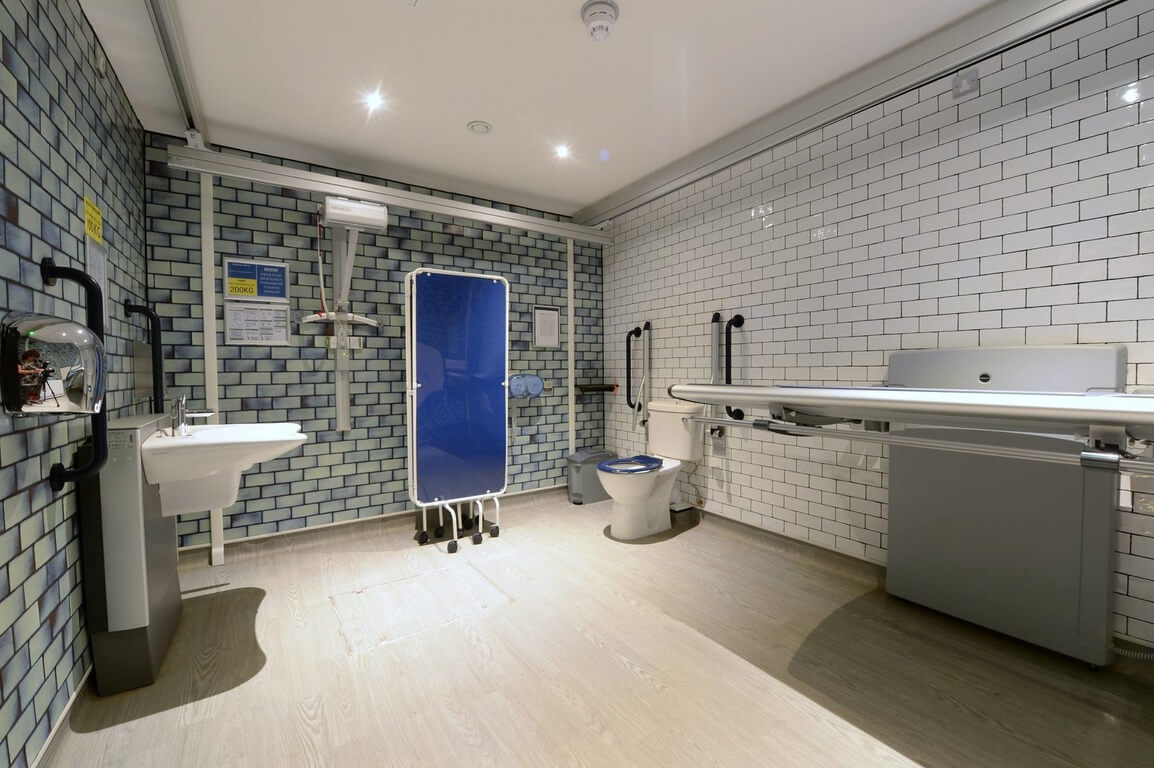
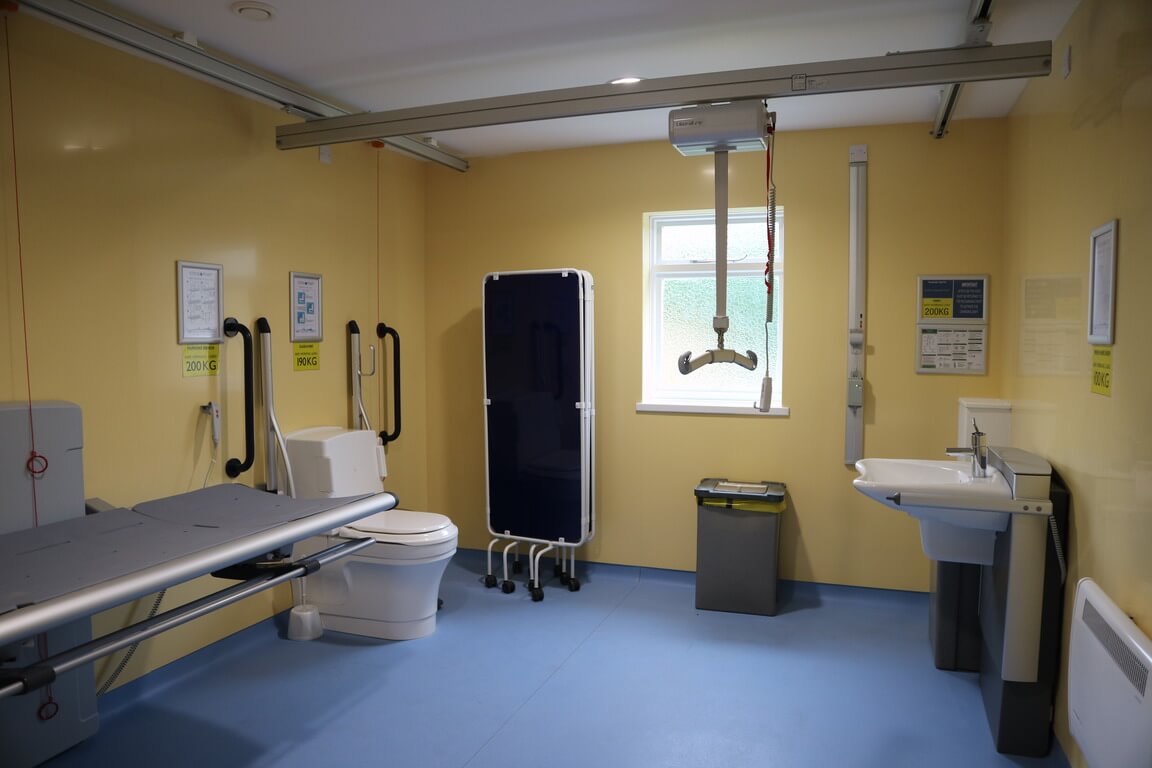
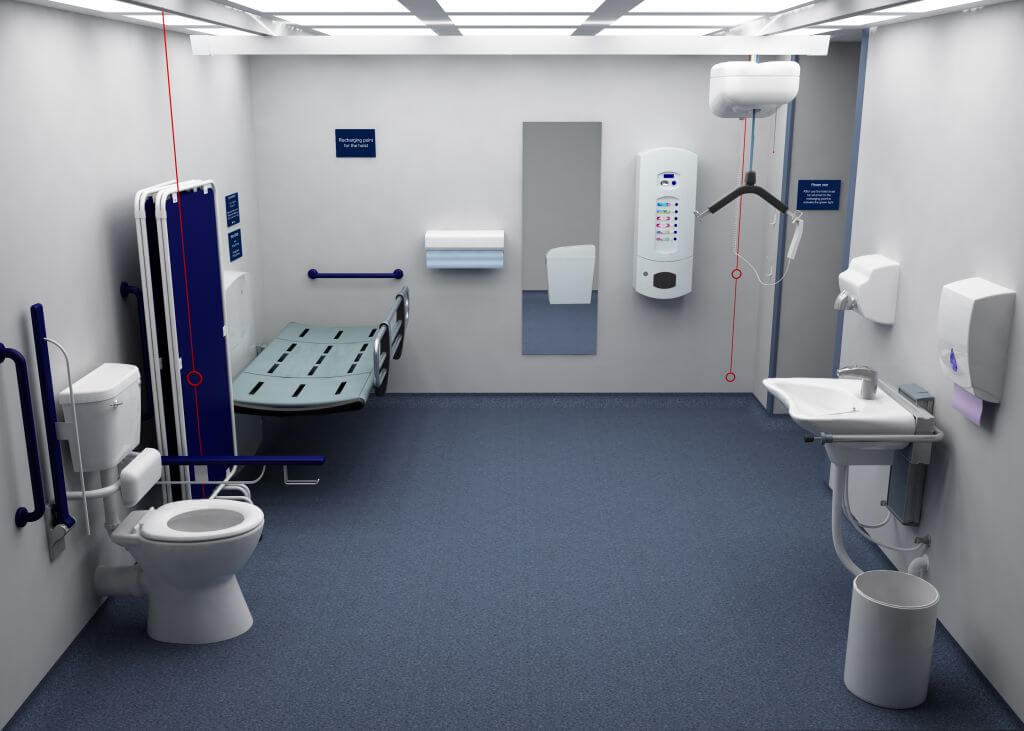
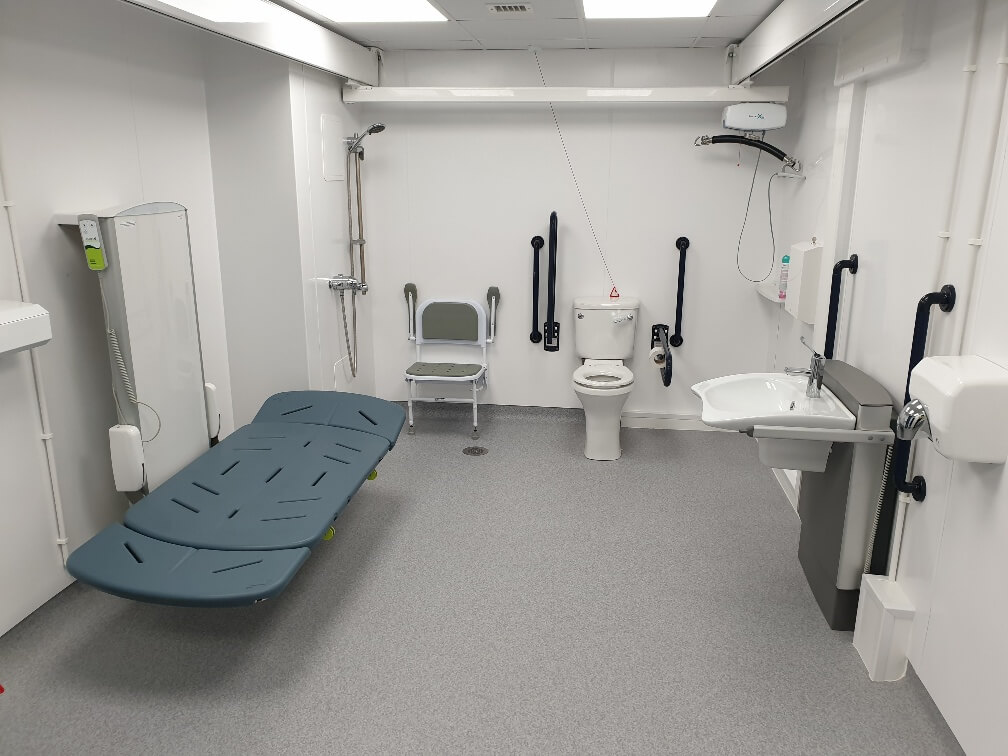
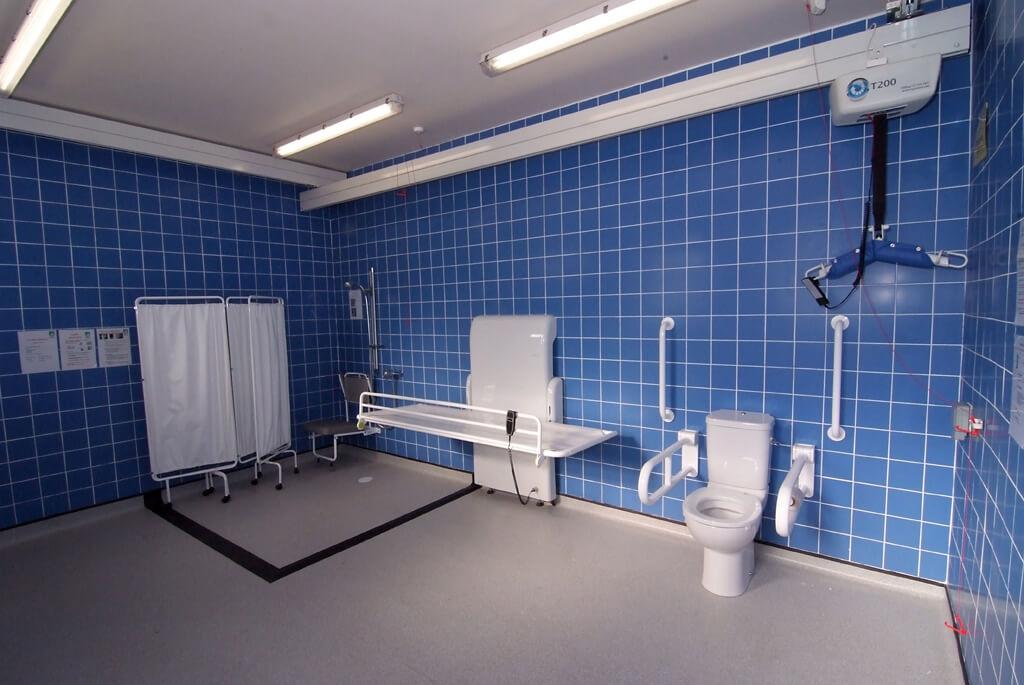
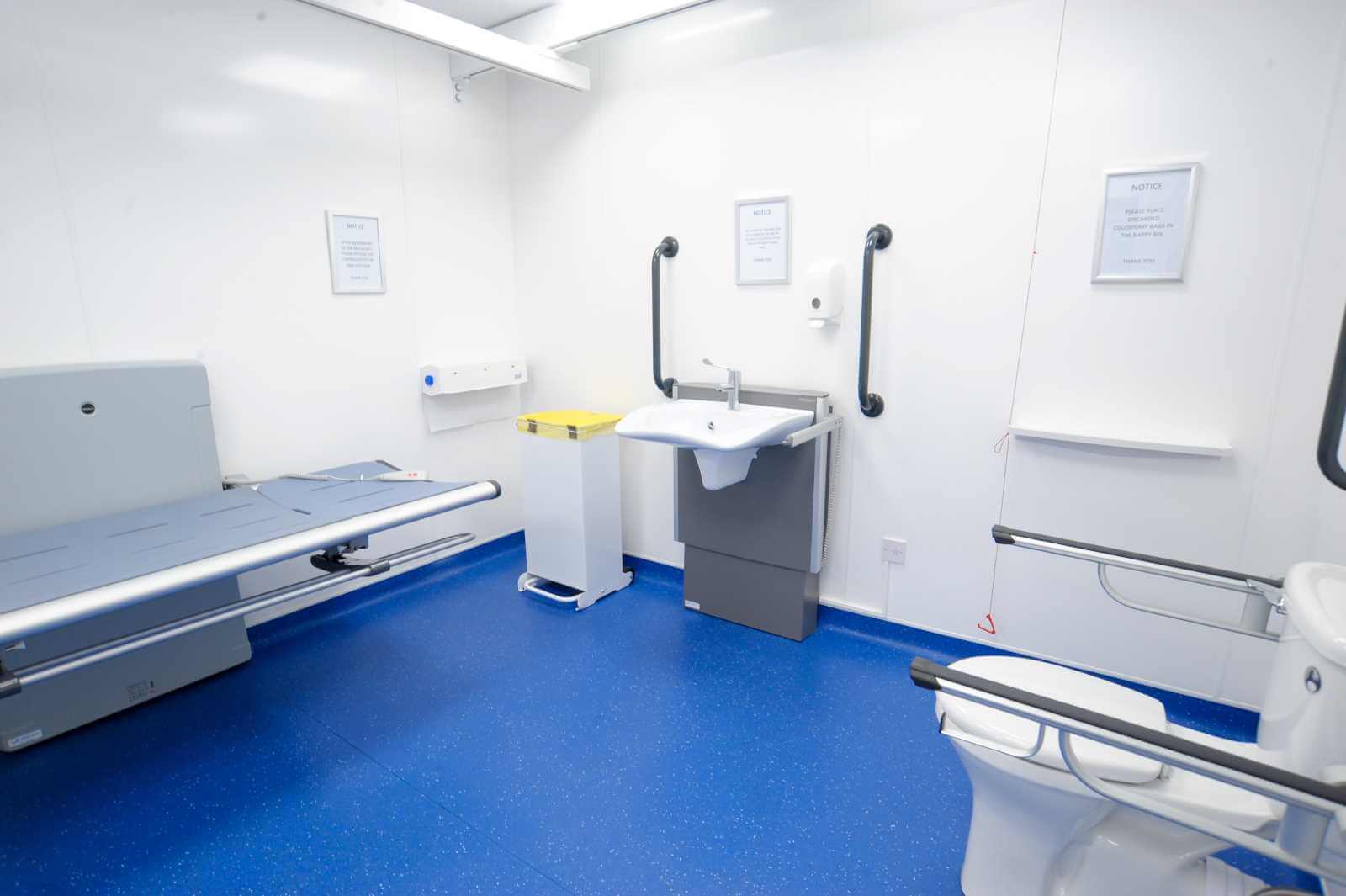
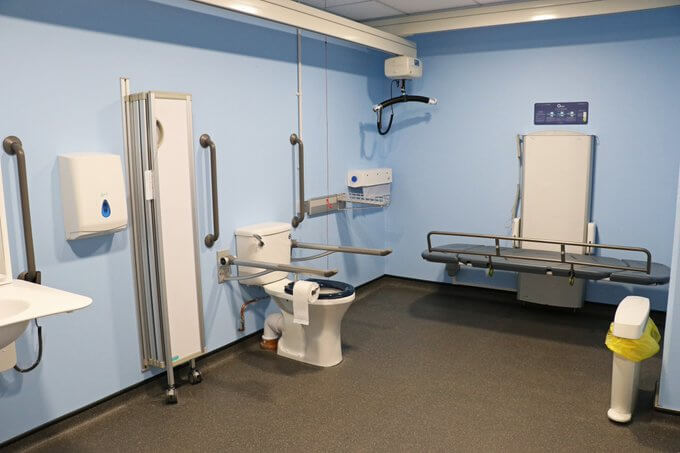
Changing Bench
Installing a changing bench will result in these benefits:
-They provide a stable platform suitable for changing adults and children
-Height adjustable versions can be manually or electrically operated
-They can be mounted on a wall or free standing
-They come in a variety of sizes and can often be made to measure
-They can accommodate a range of weights
-They have padded hygienic fabric covers
-They may or may not have side safety rails
-They may also be used for showering
Types of changing bench
- Height adjustable changing benches, either:
- wall mounted; or
- free standing – manually or electrically operated
- Fixed height changing bench (not recommended by the Changing Places Consortium)
All height adjustable changing benches should be able to be adjusted to an appropriate safe working height for carers. This will mean that carers can work at an appropriate height and should reduce the strain on their backs.
It also means that carers will not have to use the toilet floor for changing.
Height adjustable changing benches come in a variety of types, sizes and shapes. They should always be chosen with good advice to meet your specific needs.
All height adjustable changing benches should be able to be adjusted to an appropriate safe working height for carers. This will mean that carers can work at an appropriate height and should reduce the strain on their backs.
It also means that carers will not have to use the toilet floor for changing.
Height adjustable changing benches come in a variety of types, sizes and shapes. They should always be chosen with good advice to meet your specific needs.
Wall mounted height adjustable changing benches:
Pros
- Provides a stable, flat surface to change pads / readjust clothing
- Can be folded against wall to make best use of small space
- Can be raised to appropriate working height for carers
- Can be lowered to assist with wheelchair self transfers
- Provides side safety rail
- Does not involve manual effort to adjust height
- Smooth action during height adjustment
- Easy to readjust height during use
- When positioned against a wall, they may offer added safety to prevent disabled person rolling away from carer onto floor
- Available in different lengths and can be made to measure
Cons
- Carers can only stand on one side
- Requires power (electricity) to operate
- Requires maintenance and servicing
- May have weight limits
Free standing height adjustable changing benches:
Pros
- Provides a stable, flat surface to change pads / readjust clothing
- Can be raised to appropriate working height for carers
- Can be lowered to assist with wheelchair self transfers
- Carers can stand on either or both sides
- On castors – can be moved to suit needs
- Does not require power to operate
- May provide side safety rails
Cons
- It can be removed easily, leaving no bench facilities
- Can take up more space than wall mounted versions
- Manually operated versions
- height adjustment requires effort, usually foot pump action
- sometimes experience jerky movement while raising height
- Electrically operated versions have a smoother lift action
- Requires maintenance and servicing
- Versions that do not provide side rails increase risk of disabled person falling while carer uses sink facilities, etc
Fixed height changing benches (not recommended by the Changing Places Consortium):
Pros
- Provides a stable flat surface to change pads / readjust clothing
Cons
- Height is fixed and cannot be readjusted
- Will not be at a suitable height for the majority of carers to use
- May not be used by carers, giving the impression that the facility is not required
- May not meet risk assessment requirements for paid carers to use
Always get good advice!
Your planned toilet is unique. Good planning and advice will help you:
- choose the best equipment
- ensure that it meets your individual needs
- ensure that what you choose works well in the appropriate layout